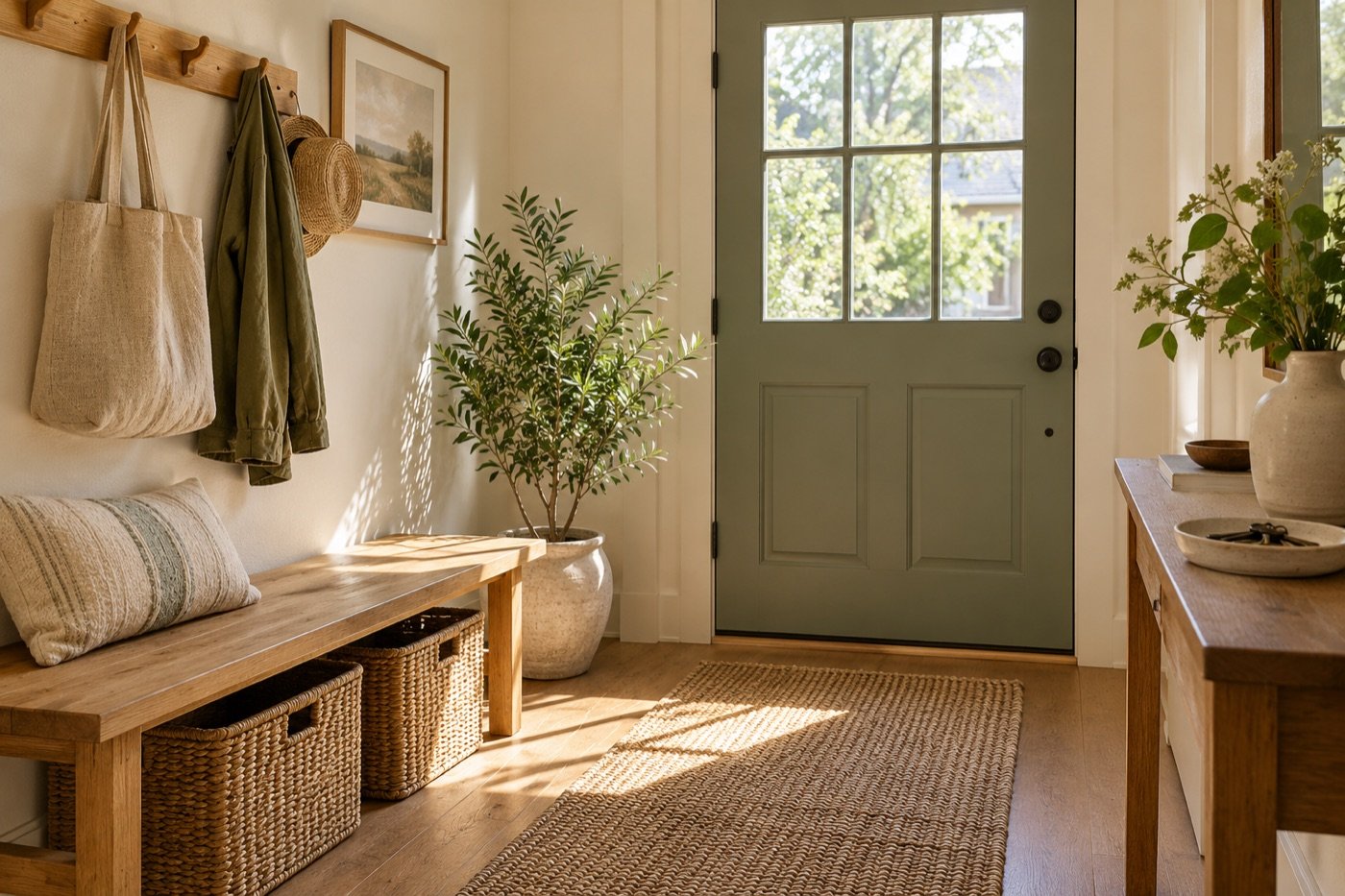
Storage organizers can make a small closet harder to use when they fit the shelf but block the door, drawers, or hanging clothes. A few measurements and a simple trial layout can prevent buying something that creates a new problem.
Measure the opening and the interior separately
Write down the width of the doorway, the usable width inside, the depth, and the height between shelves. These can be different measurements. Check door hinges, tracks, handles, and the space needed for the door to move.
Record the narrowest usable dimension rather than rounding up. Make a quick sketch and label the measurements so you do not confuse the opening with the back wall. Use units consistently when comparing an organizer’s published dimensions.
Measure the objects you plan to store
A container should fit both the closet and its contents. Measure your folded stacks, shoe pairs, or bags in the position you intend to store them. Leave space to grip the item and remove it without lifting out everything above it.
For hanging clothes, check the depth needed for the hangers and the drop below the rail. Do not assume space beneath short garments will remain available if longer clothing shares the same section.
Test with a temporary footprint
Use a piece of paper or a lightweight empty box to represent the footprint of a proposed organizer. Put it in place and open the door fully. Reach for items behind and beside it. This trial is especially useful with sliding doors that expose only part of the closet at a time.
Do not climb on boxes or furniture to take measurements. Keep your trial layout lightweight and avoid stacking items where they could fall. Any fixed shelving must suit the wall and intended load; follow installation instructions or obtain appropriate help.
Compare usable space, not just capacity
An organizer with thick sides or many small compartments may reduce the volume available for bulky items. Ask whether the divisions match the groups you need. Adjustable storage can help, but only when it is easy enough to rearrange without emptying the entire closet.
Buy for one defined problem
Write a sentence describing the problem before shopping: “I need two shallow containers for spare pillowcases,” for example. If you cannot name what the purchase will improve, try rearranging your current storage first.
Our linen closet guide explains how to build useful groups before choosing containers. For entryways, start with our guide to a clear arrival space.
Further reading
For related official guidance to consider alongside this organizing project, see CPSC: furniture and TV tip-over prevention.
Leave a Reply