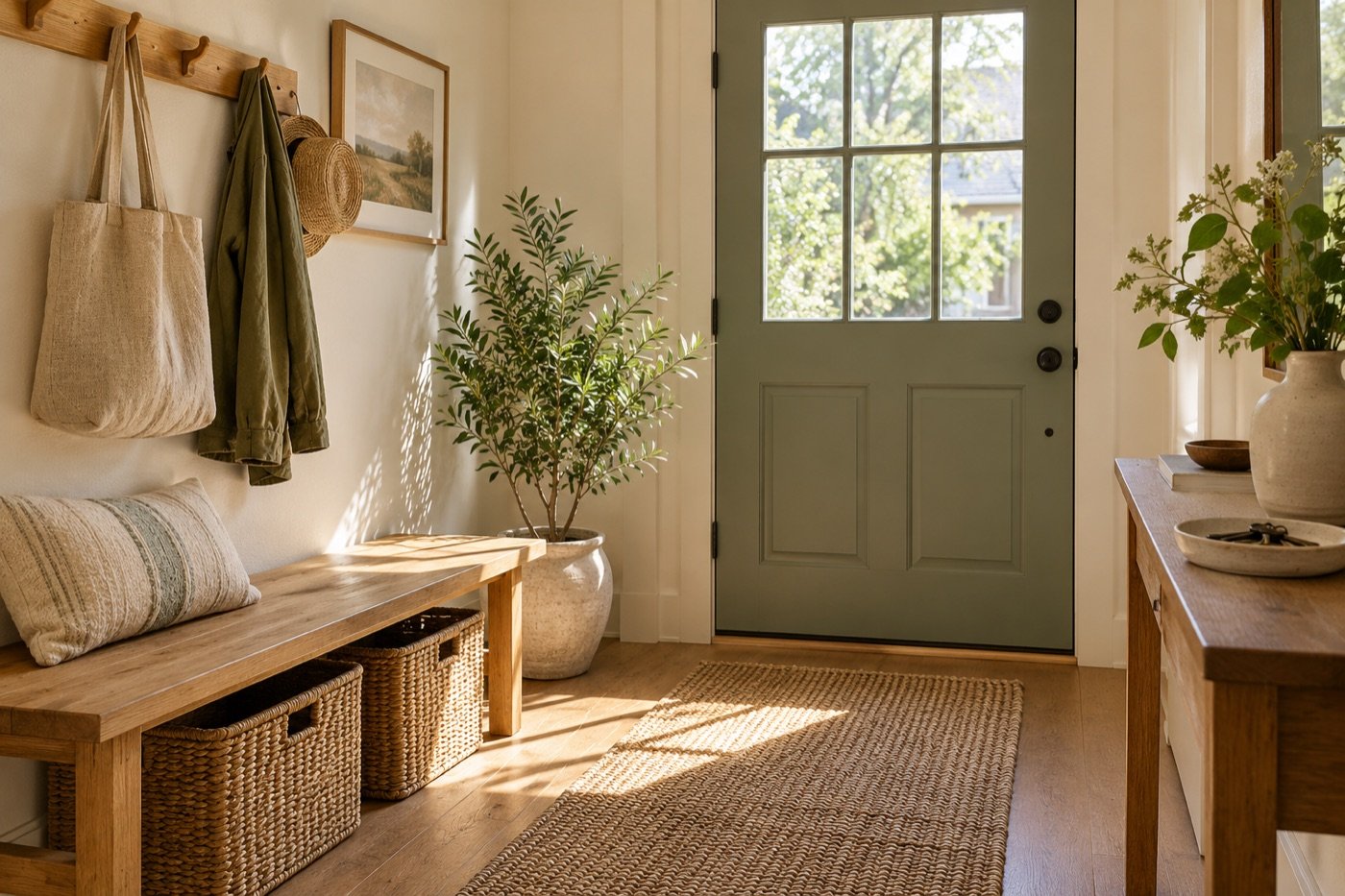
A small entryway works best when it supports the few things you actually do at the door. Before adding shelves or baskets, identify what arrives with you: keys, shoes, bags, mail, or a jacket. Give those items a clear landing place and keep the walking route open.
Start with the door and walking route
Open the door fully and walk through carrying the bag you normally use. Notice where you turn, set things down, and remove your shoes. A storage arrangement that fits against the wall can still be awkward if it sits where you need to stand. Keep the door swing, exits, and access to switches clear. Do not place loose bins where someone could trip over them.
Limit the entryway to current essentials
Collect everything in the space and sort it into three groups: used on most outings, used occasionally, and belongs elsewhere. Keep the first group near the door. Move seasonal shoes, spare bags, and sports equipment to their main storage areas. The entryway should be a transfer point rather than the permanent home for every outdoor item.
For a shared household, ask each person to choose one everyday bag and the shoes they currently use. This creates a realistic limit without requiring everyone to own the same amount. If someone needs more equipment, give it a separate location instead of letting it expand across the floor.
Make three simple landing zones
Use a shallow dish you already own for keys and other small items. Place it on an existing ledge or shelf within comfortable reach. Keep house keys out of view and reach from outside, including through a letter slot or open window.
Set aside one defined area for shoes. An existing mat can act as its boundary. If shoes spread beyond that area, return the least-used pair to a closet rather than adding another row. Let wet footwear dry before putting it into enclosed storage, and follow the care instructions for the material.
Give incoming paper one temporary tray. Separate urgent items from recycling as soon as you arrive, and move bills or documents to their regular filing location during a scheduled review. Do not leave documents showing private information visible to visitors.
Use vertical space only when it is suitable
Existing hooks can help with lightweight items, but check their condition and stated load limits. Any new wall-mounted storage needs fixings suitable for the wall and the intended weight. An over-door organizer also needs enough clearance for the door to close properly. If you rent, check the rules before attaching anything. You can start with an existing closet hook instead.
Try the arrangement for a week
At the end of each day, return items that belong in other rooms and check the walking route. Notice which belongings repeatedly miss their assigned place. Move the landing zone closer to the natural action, or make it easier to use with one hand. A lid, a high shelf, or an overfilled basket may be the obstacle.
After a week, keep what helped and remove what added friction. Buy storage only if you can name a specific unsolved problem and have measured the available space. A useful entryway is one that is easy to enter, easy to leave, and quick to reset.
Further reading
For related official guidance to consider alongside this organizing project, see U.S. Fire Administration: home escape planning.
Continue exploring
Next, read our guide to a landing zone that keeps the walkway clear, or browse all 50 home guides.
Leave a Reply